The Role of Encryption in Modern Car Key Programming
- RESIDENTIAL LOCKSMITH
- HOME LOCKOUT SERVICE
- LOCK INSTALLATION
- HOME REKEYING
- ELECTRONIC KEYPAD LOCK
- FINGERPRINT LOCK INSTALLATION
- MASTER KEY SYSTEM
- DEADBOLT INSTALLATION
- CAR LOCKSMITH
- CAR KEY DUPLICATION
- BROKEN KEY EXTRACTION
- CAR KEY PROGRAMMING
- COMMERCIAL LOCKSMITH
- CAR LOCKOUT SERVICE
- COMMERCIAL LOCK INSTALLATION
- KEYLESS ENTRY SYSTEM
- OFFICE LOCK INSTALLATION
- OFFICE LOCKOUT SERVICE
- EMERGENCY LOCKSMITH
The Role of Encryption in Modern Car Key Programming
Automotive security has transformed from simple mechanical teeth into a sophisticated digital fortress. When you press the ignition button or turn your key, a silent, lightning-fast exchange of encrypted data occurs between your key and the vehicle’s computer. This invisible layer of protection ensures that only a verified signal can start the engine, effectively neutralizing traditional theft methods like hot-wiring. Understanding this technology is essential because when you lose a key, you aren’t just replacing a piece of hardware; you are performing a complex task of car key programming. This digital synchronization with Blueline Locksmith requires specialized tools and a deep understanding of cryptographic protocols to ensure your vehicle remains both accessible to you and impenetrable to thieves.
How Rolling Codes and Encryption Prevent Theft
The Engine Control Unit (ECU) and the transponder chip stay in sync using a shared secret “seed.” When these codes match, the immobilizer allows the fuel pump and ignition to engage. If a thief tries to use a previously captured code, the car ignores it because that code has expired.
This constant evolution of data makes modern security incredibly robust. However, it also makes the programming process much more technical. What used to be a simple mechanical task is now a complex digital authentication process.
The Challenge of High-Bit Encryption
Car manufacturers now use higher bit-rate encryption to stay ahead of hackers. Many European and high-end domestic vehicles use 128-bit or 256-bit security layers. These systems require a technician to bypass multiple software firewalls.
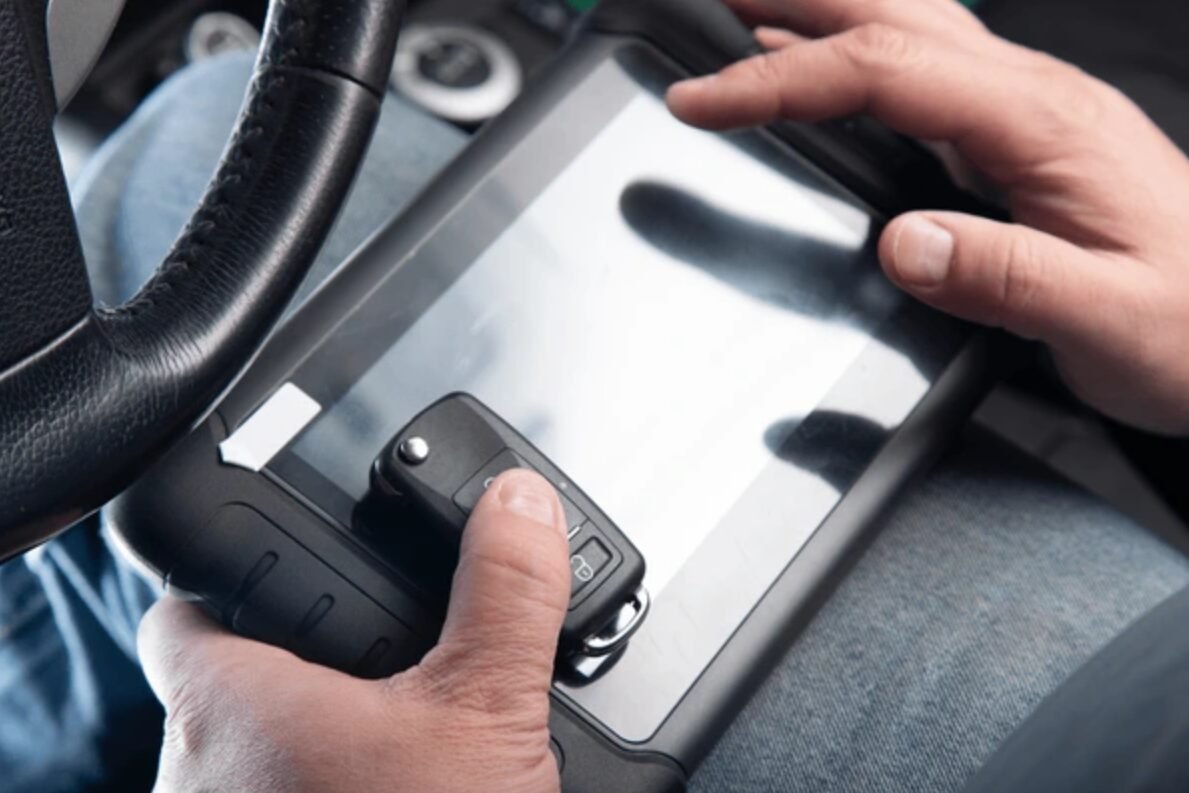
A professional must use a licensed diagnostic interface to “handshake” with the ECU. This often requires a secure connection to the manufacturer’s server to verify the new key. Such safeguards prevent unauthorized users from creating a working key with basic, off-the-shelf devices.
Bypassing Security to Restore Access
The programming task becomes much harder when all keys are lost. Since no “master” key exists to authorize a new one, the technician must perform a “forced” synchronization. This often involves an EEPROM pull to read data directly from the car’s computer chips.
Once they find the security bit, they write a new digital identity into the car’s memory. This level of technical surgery requires a steady hand and professional software. Precision is vital to avoid “bricking” the car’s computer, which would lead to an expensive replacement.
Why You Need a Digital Expert for Your Key Needs
The complexity of modern encryption means that a hardware store cannot simply “clone” your high-security key. Even if the physical blade turns the lock, the engine will remain dead without the correct digital signature. You need a specialist who understands the software side of automotive security—someone who can navigate the encrypted modules of your vehicle without triggering a total system lockout.
Ensuring your car stays secure while remaining functional requires the right balance of technology and expertise. Blueline Locksmith invests in the latest cryptographic tools and software updates to handle the most advanced encryption protocols on the market.